Soft Corals Experiments
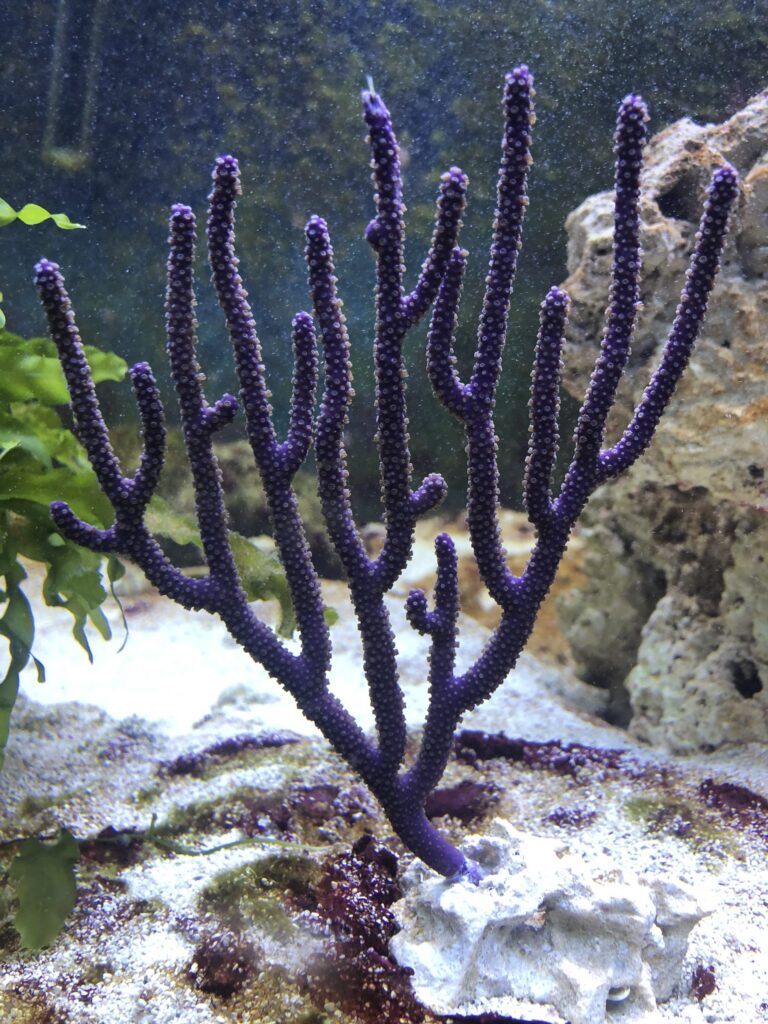
Coral reefs provide a home for at least 25% of all marine species and coral bleaching due to climate change threatens to disrupt many of these ecosystems and food sources for humanity. Gorgonian corals are the most resilient corals to warming ocean temperatures that result from climate change. One hypothesis that explains the mechanism of this adaptation is that gorgonian corals may be particularly adept at becoming exclusively (or mostly) autotrophic. Under stable environmental conditions, gorgonians are filter feeders that can also obtain energy from symbiotic algae living in their tissues. Our goal is to identify whether their ability to survive a rapidly changing environment is enabled by their particularly plastic morphologies that may allow an efficient and rapid switch to exclusive or majority polyp feeding instead of a reliance on their photosynthetic algae, which are typically expelled by a stressed coral due to a changing environment. Specifically, we combine experiments with live corals in a custom-built flow tank with modeling to learn how a gorgonian coral interacts with and is affected by its environment.
Soft Corals Graph Theory
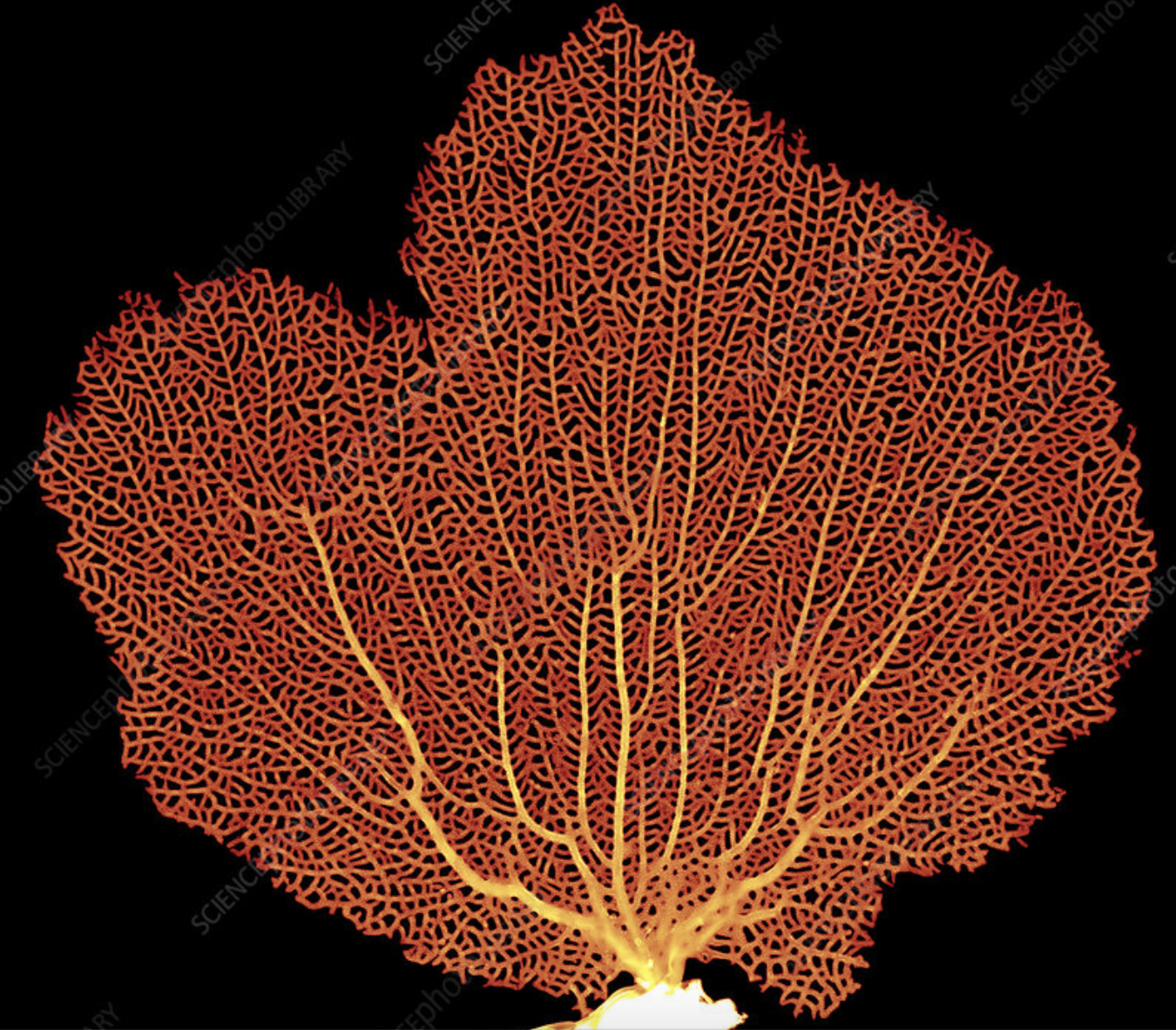
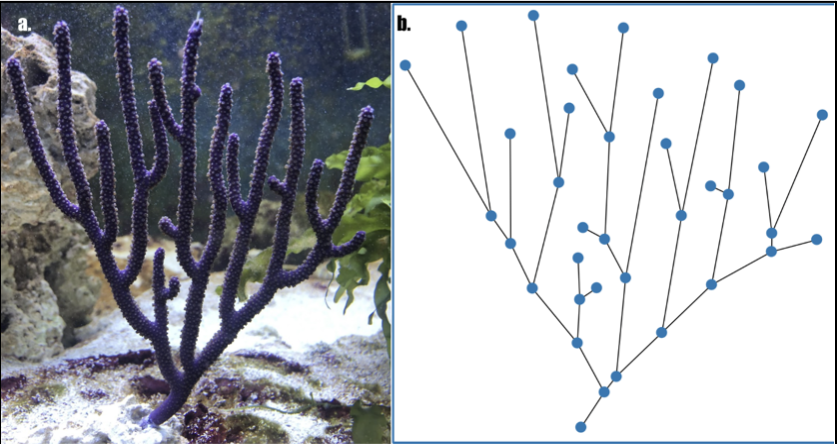
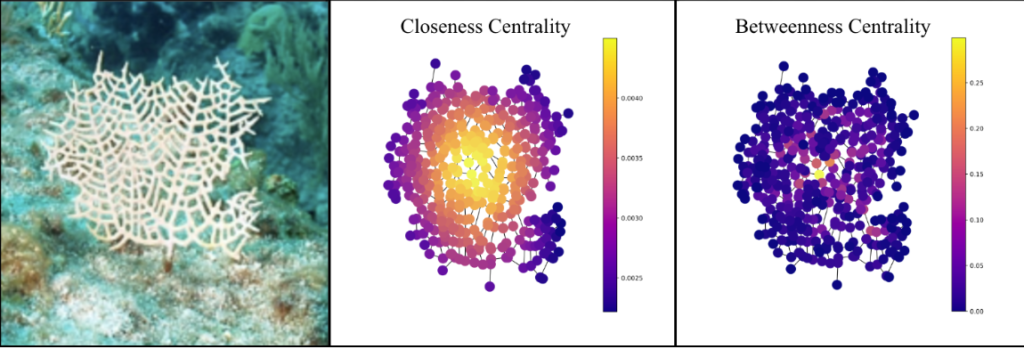
We analyze a diverse dataset of over 350+ images of quasi-two-dimensional soft corals, which are colonies of organisms connected by a network made of biological tissue. We utilize graph theory to find metrics that can help identify coral species and assist in the quantification of coral patterns to help assess what attributes contribute to their hardiness in the face of climate change. From this, we identify two main classes of coral morphologies to discover some functions and classify these coral tissue networks using mathematical metrics. We compare these metrics to minimal and maximal graph models and find how these coral networks balance the cost of a network versus the transport efficiency. The results mark the first step in establishing the type of analysis to identify coral species.
Plant motion
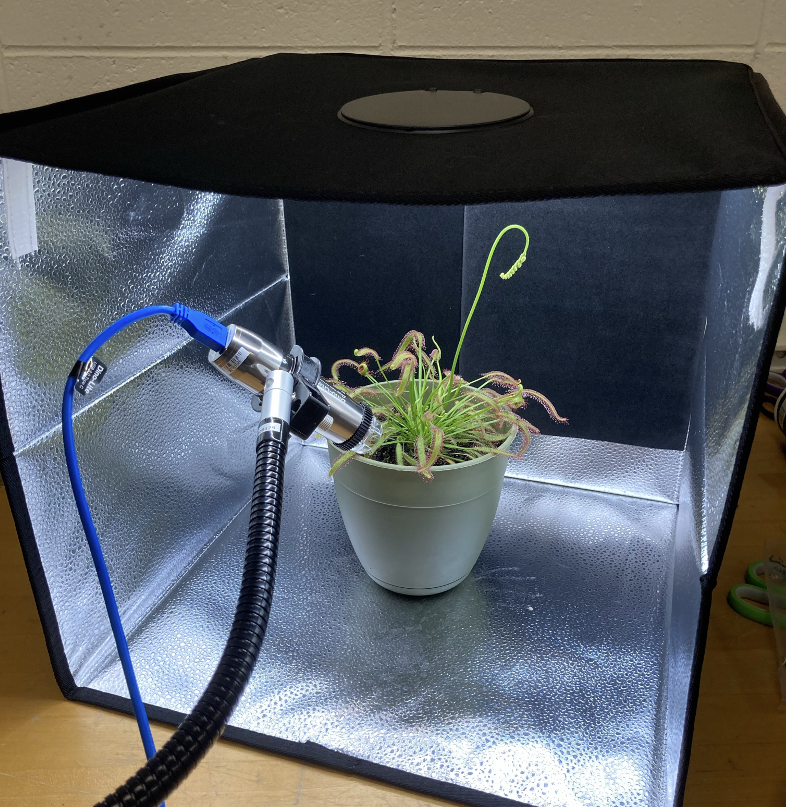
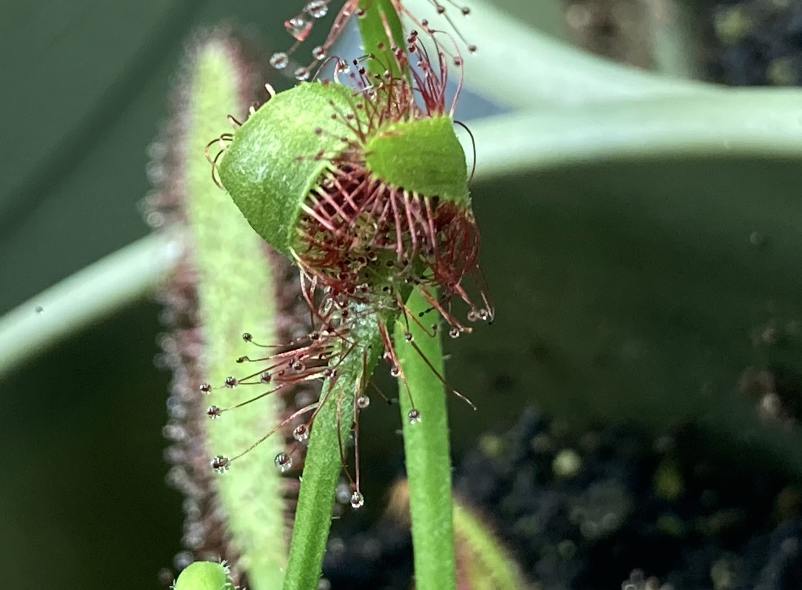
Sundews represent an entire genus of plants called Drosera. They are all carnivorous but differ in leaf and stem shapes, and some even possess different trapping mechanisms. Additionally, they all have trichomes which look like little hairs that cover
the leaves that act as the first mechanism of trapping that occurs when an insect lands on the leaf. Then the leaf slowly folds over the insect to digest it, followed by a mechanisms of reopening back to its original conformation when it has finished digesting. Unique in plant life, this folding motion is reversible,
meaning that the leaf is capable of folding and unfolding without growth occurring in the leaf. The goal of this research is to model this trapping mechanism in different species of sundews.